
Newsletter: The law on sexual harassment in Botswana
Many definitions of sexual harassment abound worldwide. For the purposes of this paper, a useful definition is offered by K. T. Schneider, J. B. Pryor and L. F. Fitzgerald in Bullying and Harassment at the Workplace (Taylor and Francis Group, LLC, 2011), who delineate sexual harassment into two broad categories: first, unwanted sex- or gender-related behaviour that creates a hostile environment; and second, unwanted quid pro quo behaviours, where the unwanted behaviour becomes a term or condition of employment and advancement. This classification has been recognised with approval by local experts (Mogapaesi, 2018) and regional experts (Basson, 2004), who recognise hostile-work-environment harassment and quid pro quo sexual harassment as two distinct categories.
Labour law in Botswana is unique in that there is separate legislation for workers in the public sector and those in the private sector. The Public Service Act (PSA), promulgated in 1998, was the first piece of legislation to provide clear protection regarding sexual harassment, though it applies only to public servants, excluding members of the Botswana Defence, Police and Prison services. The Employment Act (EA), first promulgated in 1982, covers all employees in the private sector. Section 38 of the PSA gives a clear, working definition of sexual harassment, although this paper argues for some amendment to it. Employees in the private sector are not without protection, as there are constitutional provisions and some limited remedies in the EA against discrimination (Section 23) and against bad treatment by the employer or the employer’s representative (Section 26).
This paper reviews the existing law relating to sexual harassment in Botswana, including the proposed bill, and then briefly reviews the law in South Africa, Zambia, Kenya and the United Kingdom, before suggesting how the law in Botswana can be enhanced to reflect regional and global trends.
More news
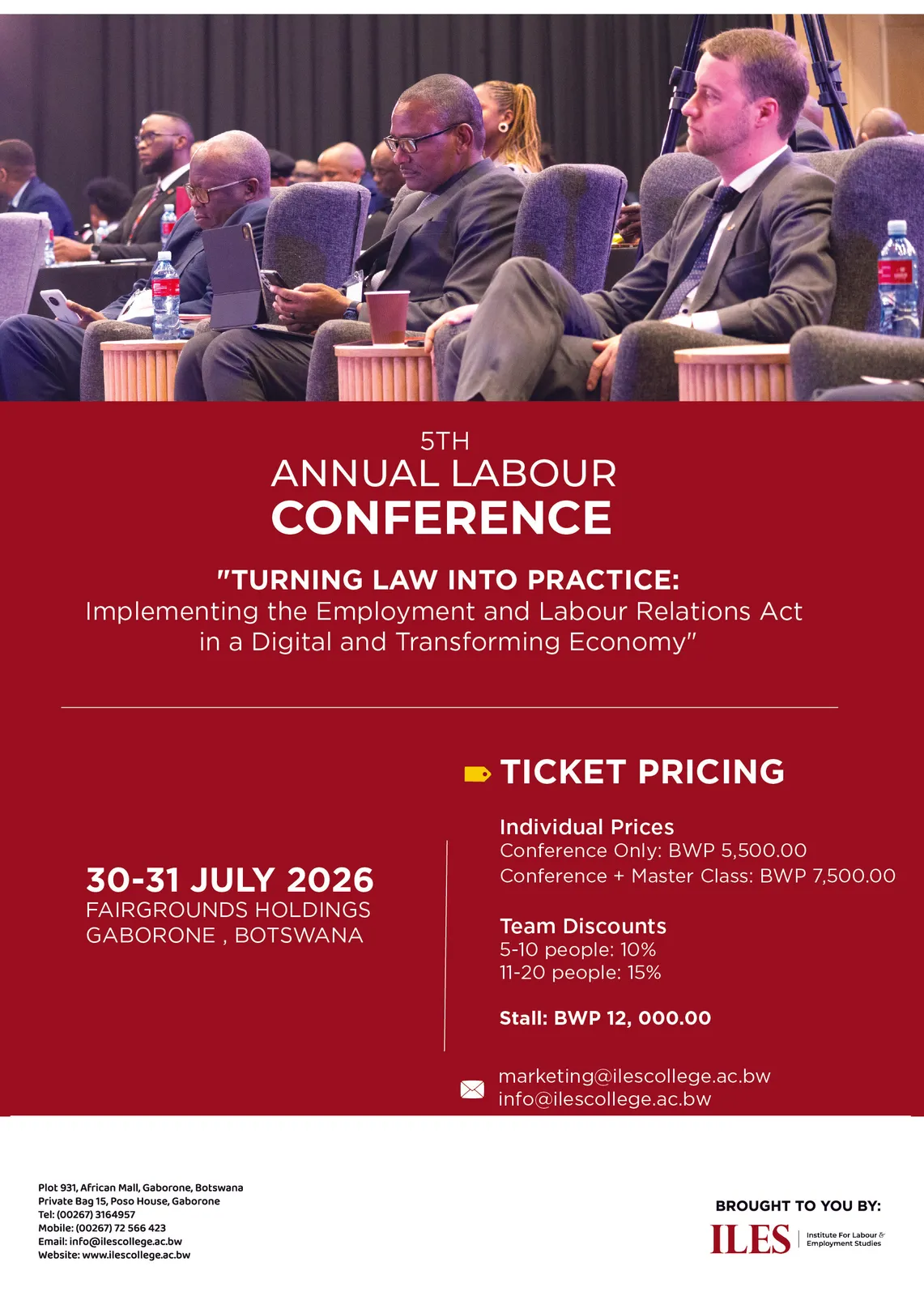
Annual Labour Conference 2026
Mark your calendars for the 2026 Annual Labour Conference, taking place on 30 – 31 July 2026.
Read more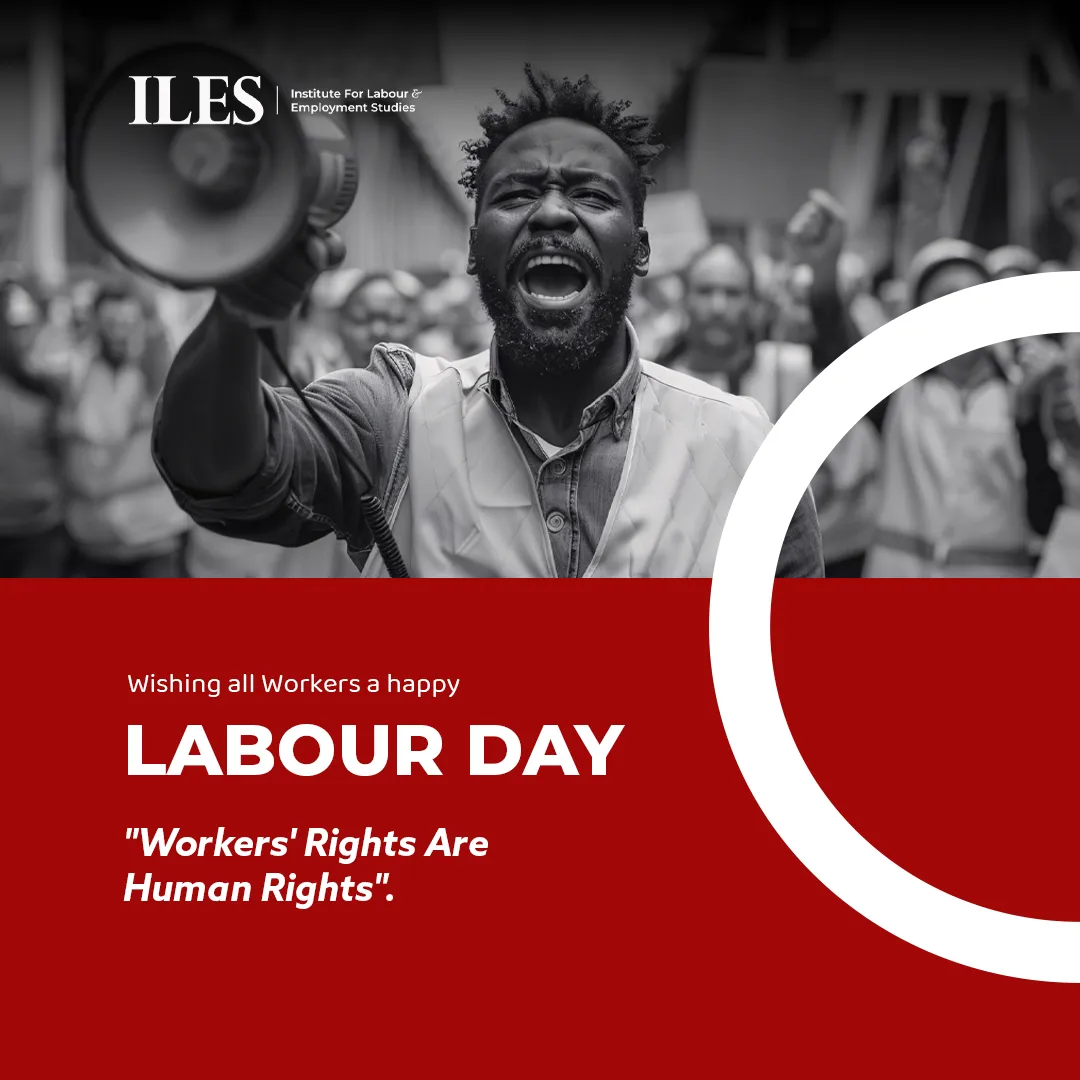
ILES Labour Day Message — 2025
The theme for May Day 2025 is "Workers’ Rights Are Human Rights" — recognising that the dignity, safety and well-being of workers are integral to the broader human-rights framework.
Read more
CEO’s speech: Memorandum of Understanding between BPSC & ILES
CEO Mr S. Hlabano’s remarks at the signing of a Memorandum of Understanding between the Botswana Public Service College and ILES.
Read more